
 044-358-81-18





Root canal treatment at Interstom Dental Clinic in Kyiv
Endodontics at the dental clinic in Shulyavka
Root canal treatment (endodontics) is one of the most important procedures in dentistry, requiring a professional approach, thorough diagnostics, and highly precise techniques. Interstom Dental Clinic employs modern root canal treatment standards, including the mandatory use of a dental microscope, allowing us to locate narrow canals and clean them with maximum efficiency.
Root canal treatment is a procedure that allows you to save your natural teeth, relieve pain, and prevent future problems. Root canal treatment is necessary when inflammation or infection reaches the pulp and surrounding structures. It is important to recognize the problem early to avoid tooth loss.
Many people underestimate the importance of preserving the internal structure of the tooth, which often leads to complications and the loss of healthy tissue. This is why it is so important to trust your health to experienced specialists who are proficient in all modern root canal treatment methods and use high-quality materials.
Why is endodontics important?
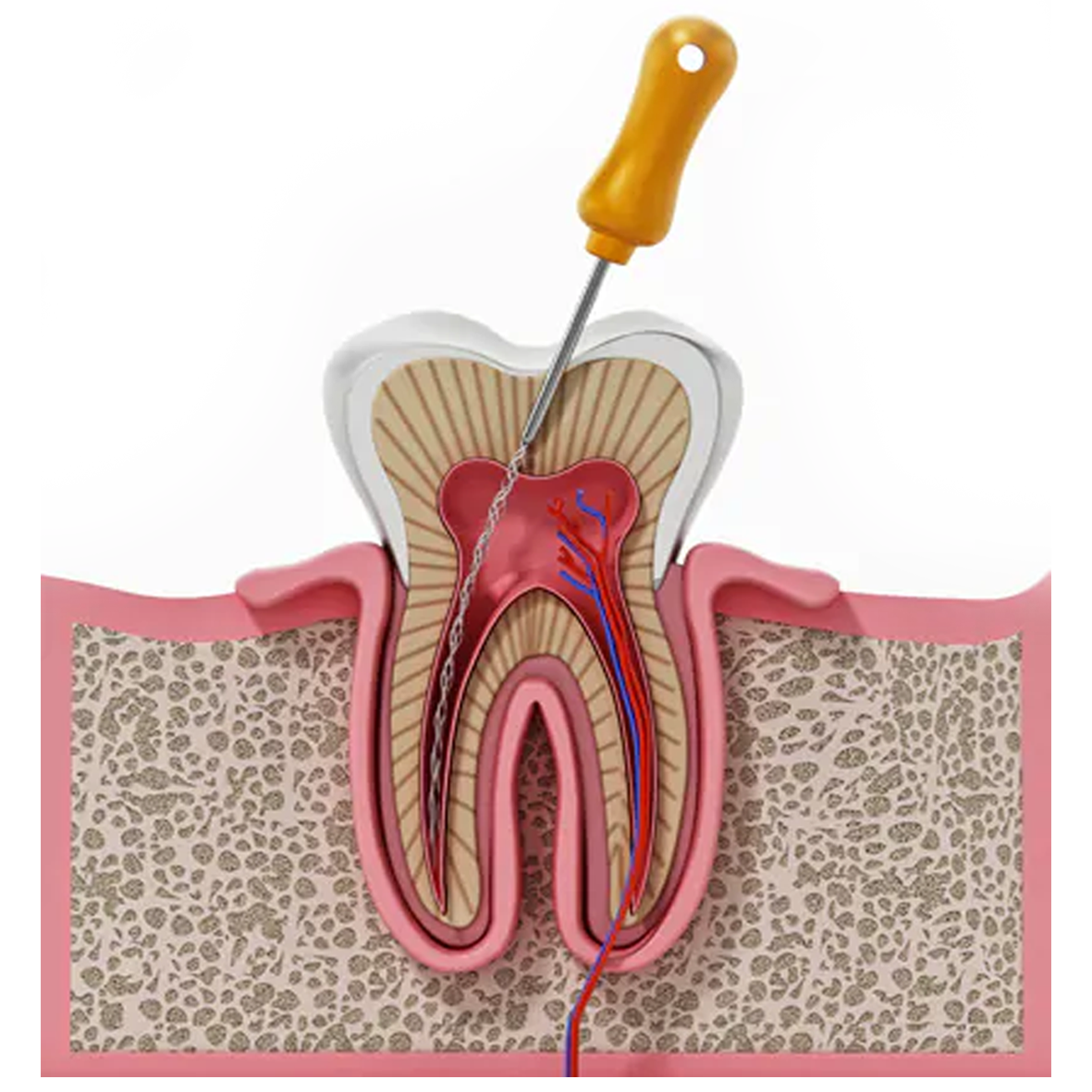
Root canal treatment is necessary when chronic caries reaches the inner part of the tooth (the pulp). In some cases, such teeth can be preserved. However, when the pulp chamber is destroyed by extensive caries, the dentist must remove the dental nerve from the pulp and perform root canal treatment. The pulp is a sealed cavity inside the tooth, consisting of capillaries and nerves, so damage to its integrity is irreversible.
The pulp chamber contains a neurovascular bundle consisting of nerve fibers, blood vessels, and connective tissue. If pathogenic microflora reaches the root canals, the bacteria cause an inflammatory process that requires immediate action, as the entire pulp is affected. Advanced pulpitis is dangerous due to tooth loss and the spread of inflammation to the gum tissue, then to the bone, and the development of complications such as periodontitis and periostitis.
Benefits of root canal treatment at Interstom Dentistry
Root canal treatment in Kyiv using a microscope
Using a microscope
Multiple zooms allow for very precise and gentle treatment
High-quality diagnostics
We use modern diagnostic equipment when planning treatment
Qualified doctors
The best endontologists in Kyiv, true professionals in their field
Anesthesia and sedation
Local anesthesia or medication-induced sleep for pain-free treatment
Using a cofferdam
We create a dry and sterile environment necessary for high-quality treatment
Guarantee
The clinic provides a guarantee for all types of dental services
When is root canal treatment necessary?
Old caries, in which inflammation penetrates deep into the dental tissues
The presence of an abscess, inflammation of the tooth root
Consequences of mechanical damage to the root, its partial or complete fracture
Acute and chronic pulpitis, periodontitis
Root Canal Treatment Stages
Root canal treatment involves thorough mechanical and medicinal preparation of the root canals, followed by hermetically sealing them along their entire length. The procedure is performed under local anesthesia or sedation.
The goal of the treatment is to remove residual pulp and bacterial flora from the canals to prevent cyst formation and inflammation.
During endodontics at Interstom Dental Clinic, the tooth is isolated using a rubber dam system, which leaves only the tooth being treated visible in the dentist’s working area. Isolation prevents the entry of foreign substances containing bacteria into the canals. Thanks to this isolation, the dentist has a dry and clean working area for comfortable treatment.
At Interstom Dental Clinic, patients undergo the following stages of endodontics:
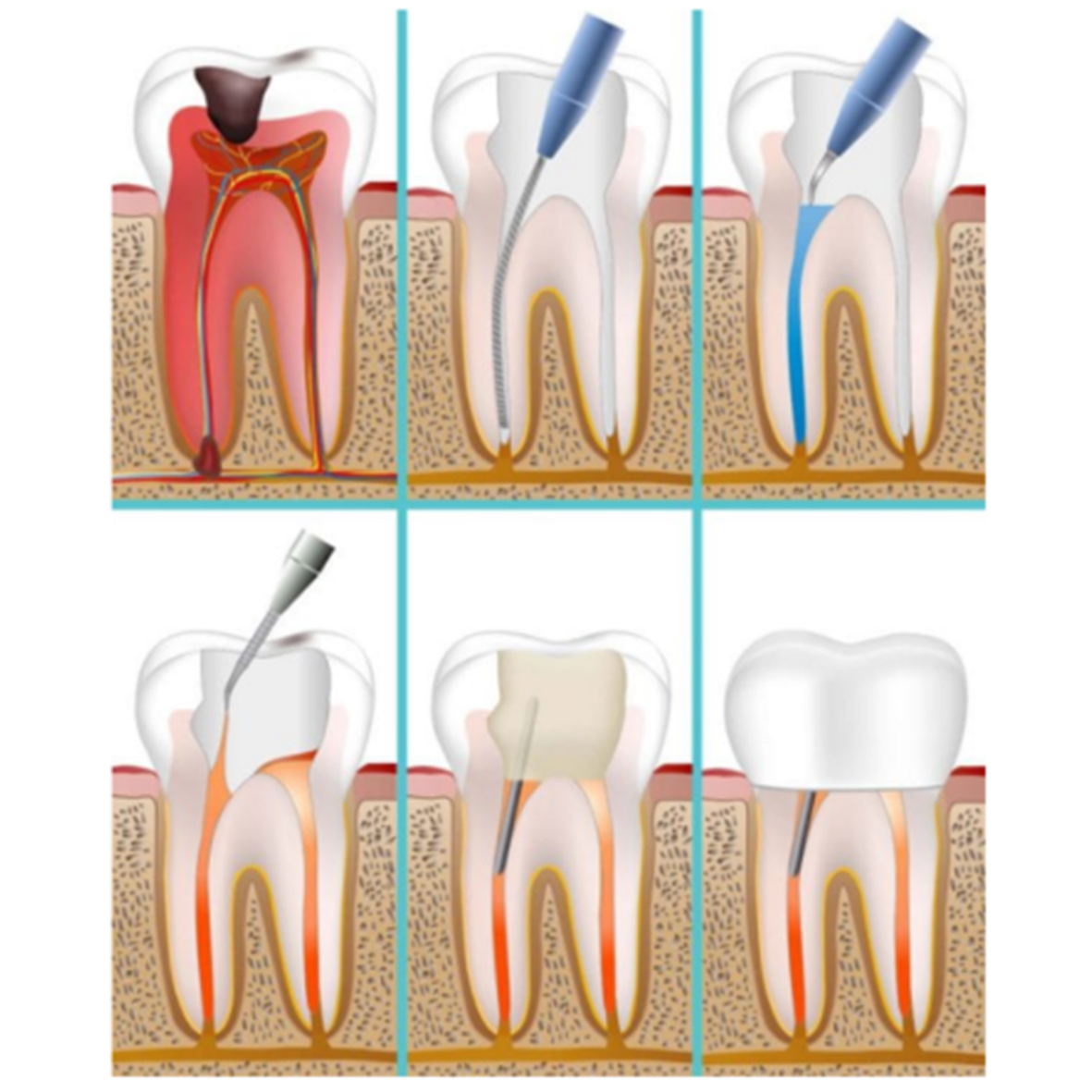
1. External examination, diagnosis, treatment planning
During the appointment, the dentist assesses the severity of the inflammatory process, conducts instrumental and, if necessary, laboratory tests, makes a preliminary diagnosis, and develops a treatment plan.
2. Preparation for Treatment
To ensure effective root canal treatment, certain preliminary procedures or treatments are required. For example, this may involve removing infected tooth tissue (caries, old fillings). The dentist isolates the tooth and, if necessary, restores missing tooth walls to ensure adequate isolation.
3. Endodontics
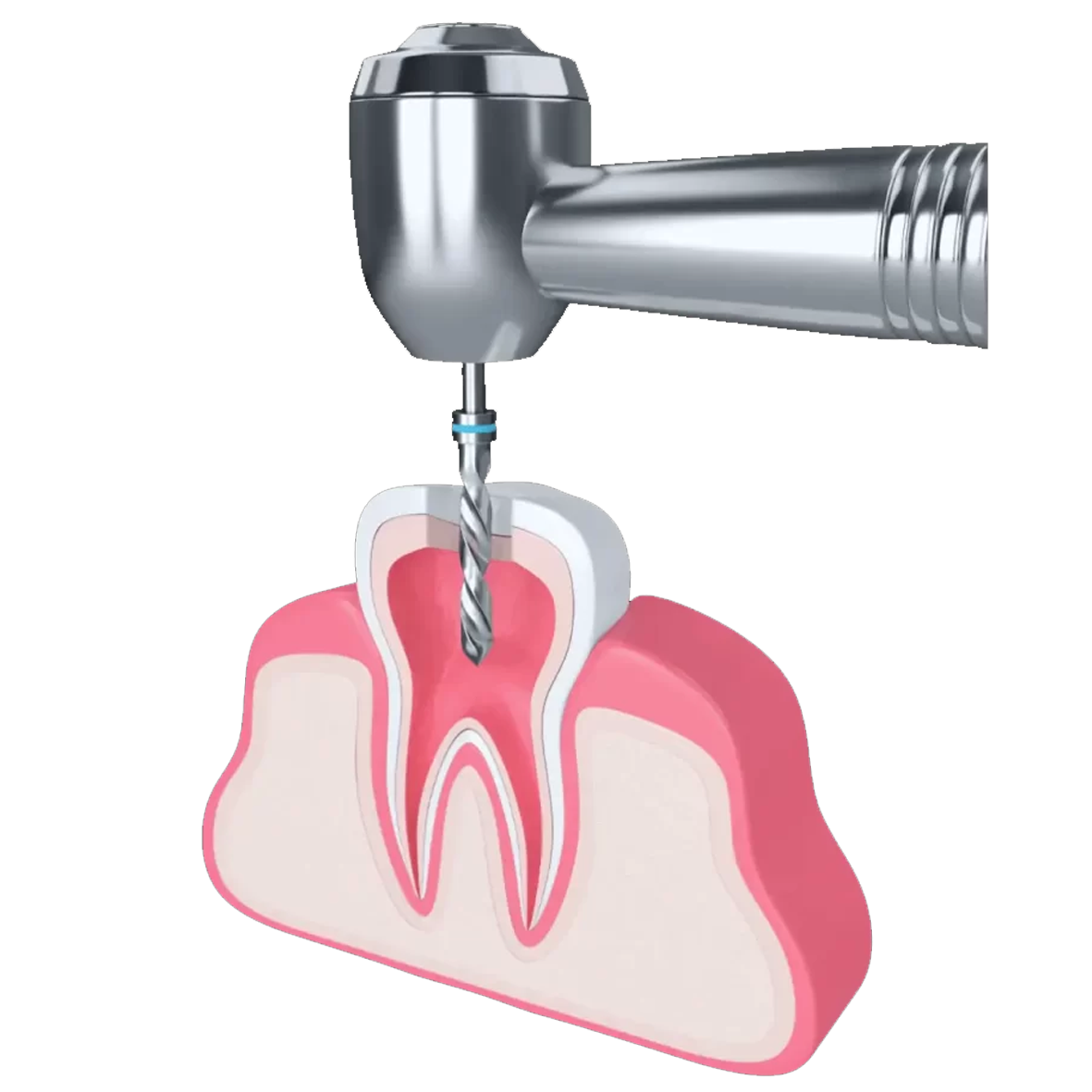
Opening the tooth cavity, accessing the root canals, removing the coronal and then the root pulp (nerve), or its decay. Medication and instrumental treatment of the root canals according to treatment protocols (depending on the diagnosis and the initial condition of the tooth). If necessary, temporary fillings are performed to treat chronic conditions, and a temporary filling is placed.
Endodontics at the Inethurst Clinic uses a microscope: the canals are about the thickness of a needle tip, making it impossible to see all the canals with the naked eye, let alone what’s inside them. One person’s tooth may have three canals, another four, and another seven. There are main canals that are easy to find, but finding other canals is no less important, as without them, the treatment may not have been fully successful.
The doctor’s task is to find all the canals, widen them to their full length to clear them of biological tissue (vessels, nerves), and seal them as tightly as possible to prevent infection from entering the canals in the future.
4. Second visit: repeat root canal treatment and permanent filling
Once the recovery period has passed and the inflammation has subsided, the dentist replaces the temporary filling with a permanent one made of a composite material that matches the color of the natural tooth. If necessary, reinforcement with a fiberglass post is added.
Endodontic Methods
Conservative Method. When the inflammatory process has only just begun to affect the pulp, medication therapy may be able to resolve the problem. A medication is placed directly on the pulp to suppress inflammation and pathogenic microflora. A temporary filling is placed over the pulp. After a few days, an X-ray is taken for monitoring, the pulp’s condition is assessed, and the medication is refilled if necessary. Once the inflammation has subsided over a certain period, the dentist places a permanent filling.
Surgical Method. If the conservative method fails, the dentist must remove the damaged nerve to prevent the inflammation from spreading to further structures of the jaw. Nerve removal, or depulpation, involves extracting the pulp, cleaning and treating the canals, and filling. Sometimes, after depulpation, the dentist places a medication in the root canals to relieve inflammation and alleviate symptoms. Next, a temporary filling is placed, and symptomatic treatment with antihistamines is prescribed. Often, inflammation of the root canals leads to periodontitis and the formation of a purulent lesion. In this situation, the doctor incises the gum tissue and drains the purulent lesion. This helps reduce the inflammatory load and allow for further treatment.